Floral & Botanical Design for Modern Creators
In the world of digital design, few elements possess the timeless versatility and emotional resonance of botanical motifs. Flowers and Botanical Elements Design offers more than just decorative imagery; it provides a foundational language for communication that bridges the gap between organic beauty and structured layout. Whether you are crafting a wedding invitation suite, designing a brand identity for a wellness startup, or assembling a digital scrapbook to preserve family memories, the integration of floral patterns can instantly elevate the aesthetic quality of your work. This approach is not about simply placing an image on a page; it is about understanding how nature-inspired vectors and seamless patterns can serve as functional tools in a creator's toolkit.
The appeal of this design style lies in its duality. On one hand, it offers the softness and intricacy found in nature, appealing to human instincts that find comfort in organic forms. On the other hand, when executed as high-quality vector graphics or high-resolution raster files, these elements provide the precision required for professional output. A well-curated set of digital papers, such as a collection featuring pink and blue hues or navy and coral contrasts, allows designers to maintain consistency across various mediums while introducing visual interest that keeps the viewer engaged.
The Technical Foundation of Quality Digital Assets
To truly leverage Flowers and Botanical Elements Design, one must understand the technical specifications that make these assets viable for both web and print. The difference between a project that looks amateurish and one that exudes professionalism often comes down to resolution and file format. For instance, a standard digital paper pack intended for serious crafters and small business owners should include files that measure at least 12 x 12 inches (30.5 x 30.5 cm) with a resolution of 300 DPI. This specific resolution is the industry standard for high-quality printing, ensuring that when a pattern is applied to a physical cardstock or a large format poster, the edges remain crisp and the colors do not pixelate.
Furthermore, the versatility of a design suite is determined by the variety of file formats included. A comprehensive package typically offers JPGs for immediate use, PNGs with transparent backgrounds for layering without white boxes, PDFs for easy viewing and printing, and EPS 10 vector files for infinite scalability. The inclusion of editable EPS files is particularly crucial for designers who need to recolor elements to match specific brand guidelines or adjust the composition of a floral arrangement to fit a unique layout. Having access to these varied formats within a single zip folder streamlines the workflow, allowing creators to move seamlessly from concept to final product without hunting for compatible files.
Applications in Scrapbooking and Personal Storytelling
For hobbyists and memory-keepers, Modern Scrapbook Paper designs serve as the canvas upon which personal histories are told. The traditional method of cutting and pasting physical paper has evolved into a hybrid digital-physical workflow. Enthusiasts can now print high-resolution digital papers at home or through professional services to create custom backgrounds for photo albums. A set of 5 unique digital papers featuring seamless patterns allows for endless variation; one sheet might serve as a full-page background, while another is cut into strips to frame photographs.
The utility of transparent PNG files cannot be overstated in this context. They allow users to overlay floral clusters or individual botanical illustrations directly onto photos or textured backgrounds, creating depth and dimension. Whether documenting a child's first year or compiling a travel journal, the ability to mix and match patterns—such as pairing a subtle geometric floral with a bold, watercolor-style bloom—enables the creator to tailor the mood of each page. This level of customization ensures that the final album feels personal and cohesive rather than generic.
Commercial Viability for Small Businesses and Entrepreneurs
Beyond personal hobbies, Flowers and Botanical Elements Design is a powerhouse for small business owners and entrepreneurs looking to establish a distinct brand presence. In industries ranging from boutique retail to event planning, the visual identity often relies heavily on the perceived warmth and elegance that floral motifs convey. Consider a small bakery launching a new line of pastel-colored macarons; utilizing a digital paper pack with matching pink and blue patterns for their packaging liners, social media posts, and menu headers creates an immersive brand experience.
Stationery designers also benefit immensely from these resources. With a commercial license, a freelancer can take a set of navy and coral digital papers and transform them into a best-selling line of greeting cards, letterheads, or business cards. The key to success here is adaptation. Rather than using the pattern exactly as downloaded, successful designers manipulate the scale, rotate the orientation, or combine different sheets from the same pack to create something entirely new. This approach respects the original artist's work while adding a layer of unique value for the end consumer.
- Event Invitations: Use seamless patterns as the base layer for wedding or party invites, overlaying text in a contrasting font for readability.
- Web Graphics: Implement low-opacity floral backgrounds on website headers to add texture without distracting from the main content.
- Product Packaging: Print high-DPI designs on wrapping paper or box inserts to enhance the unboxing experience for customers.
- Social Media Templates: Create reusable story backgrounds that maintain brand consistency across Instagram, Pinterest, and Facebook.
Strategic Design Choices for Maximum Impact
When integrating botanical elements into a project, the goal is to achieve balance. A common mistake among novices is overcrowding the design with too many competing patterns. To keep results clear and effective, it is advisable to follow the "one dominant, one supportive" rule. If you are using a busy, detailed floral vector as your focal point, pair it with a simpler, tonal seamless pattern or a solid color block. This hierarchy guides the viewer's eye and prevents visual fatigue.
Color theory also plays a pivotal role. While a specific pack might offer pink and blue variations, understanding how these colors interact with your specific audience is vital. Soft pastels may evoke tranquility and are excellent for baby showers or spa branding, whereas high-contrast combinations like navy and coral suggest energy and modernity, suitable for fashion blogs or creative portfolios. By selecting the right palette from your digital library, you align the emotional tone of the design with the intent of the message.
Moreover, organization is key when working with extensive libraries of digital downloads. Keeping your zip folders categorized by theme, color, or file type ensures that you can quickly locate the perfect asset when inspiration strikes. Treat your digital assets like a physical studio; a well-organized workspace fosters creativity and efficiency. When you know exactly where your 300 DPI EPS files are stored, you spend less time searching and more time creating.
Adapting Styles for Diverse Audiences
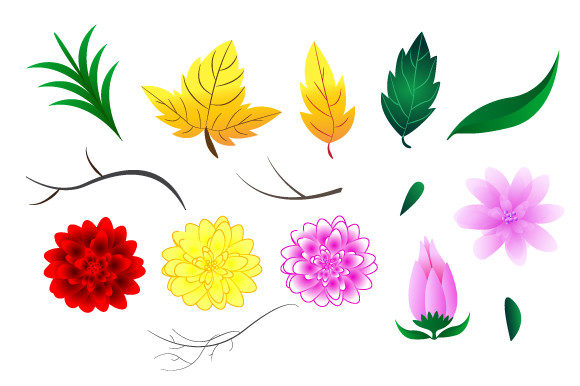
The beauty of Vector Graphics and high-resolution raster images is their adaptability across different demographics and platforms. An educator creating materials for a biology class might use realistic botanical illustrations to teach plant anatomy, leveraging the clarity of vector lines to highlight specific parts of a flower. Conversely, a lifestyle blogger might use the same assets in a stylized, abstract manner to create aesthetically pleasing pins for Pinterest that drive traffic to their site.
For marketers, these elements provide a way to soften corporate communications. A quarterly report or a whitepaper can feel dry and intimidating, but the addition of a subtle floral watermark or a botanical border can make the document feel more approachable and human-centric. This subtle touch can improve engagement rates, as readers are often more receptive to content that feels designed with care and attention to detail.
Ultimately, the value of a high-quality digital paper pack lies in its potential to be a springboard for innovation. It provides the raw materials—the textures, the colors, the forms—but the vision comes from the user. Whether you are a seasoned graphic designer or a weekend crafter, the tools available today allow for a level of professional polish that was once reserved for large agencies. By mastering the use of these floral and botanical elements, you equip yourself with the ability to tell richer stories, build stronger brands, and create visuals that resonate deeply with your audience.