Streamlining Brand Identity with a Versatile Logo Design Set
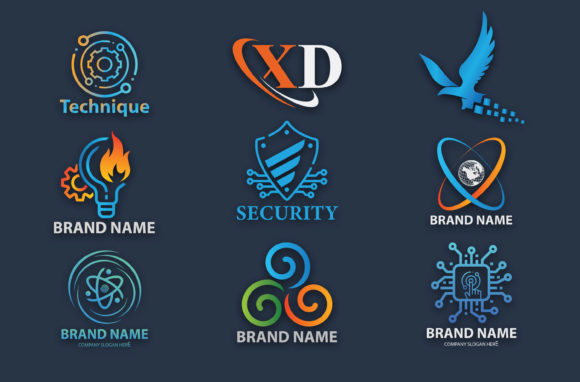
In the fast-paced environment of modern business and creative entrepreneurship, the speed at which you can establish a visual identity often dictates your momentum. Whether you are a freelancer launching a new consultancy, a marketer rolling out a campaign for a client, or a small business owner pivoting your brand strategy, the foundational element remains the logo. However, commissioning custom artwork from scratch for every iteration or sub-project can be prohibitively expensive and time-consuming. This is where a comprehensive Logo Design Set becomes an indispensable asset in your workflow. It serves not merely as a collection of images, but as a flexible framework that allows you to easily change and fit designs to your specific business specifications without sacrificing professional quality.
A high-quality design set functions as a strategic shortcut. It bridges the gap between conceptual planning and final execution. When you acquire a package containing 100 editable and resizable vectors, you are essentially buying time and consistency. These assets are designed to be integrated into a broader creative process, acting as the raw material that you refine rather than the finished product you simply paste. The value lies in the adaptability; because all colors and text can be modified, the templates serve as a starting point that aligns with your unique brand guidelines rather than forcing your brand to conform to a static image.
Integrating Vector Assets into Your Creative Workflow
The true power of a Logo Design Set is realized when it is seamlessly woven into your existing production pipeline. For professionals who manage multiple projects simultaneously, organization is key. A well-organized file structure ensures that you can locate the right base design quickly, modify it, and move to the next stage of development without friction. When these files are provided in industry-standard formats such as .ai (Adobe Illustrator) and .eps, they interact smoothly with the tools you likely already use daily. This compatibility eliminates the need for complex conversions or workarounds that often degrade image quality.
Consider the scenario of a marketing agency preparing a pitch deck for a prospective client in the tech sector. Instead of starting from a blank canvas, a designer can pull a relevant geometric template from the set, adjust the color palette to match the client's existing corporate hues, and swap the placeholder text for the client's name. Because the files are vector-based, this resizing and reshaping happens without any loss of fidelity. You can scale the logo up for a billboard mockup or down for a mobile app icon, and the lines remain crisp. This scalability is critical for maintaining a professional appearance across diverse media channels.
Furthermore, the inclusion of CMYK color files ensures that what you see on your screen translates accurately to print. Many digital-first creators overlook this until they attempt to print business cards or brochures, only to find their vibrant RGB colors have turned muddy. A design set prepared with print-ready standards in mind removes this risk. By working in CMYK from the outset, you ensure consistency between your digital presence and your physical collateral. This attention to color management is a hallmark of professional execution and prevents costly reprints or brand inconsistencies.
Preparation and Customization Strategies
To maximize the utility of a Logo Design Set, preparation is essential before you even open the first file. Begin by defining your brand's core attributes: your primary color codes, your typography preferences, and the emotional tone you wish to convey. Having these parameters ready allows you to filter through the 100 available options efficiently. You aren't just looking for a shape you like; you are looking for a structure that supports your specific message. Once you identify a candidate, the customization process begins.
The editing phase should be approached methodically. Since the text is fully editable, take the opportunity to experiment with kerning and leading to ensure the company name sits perfectly within the graphic element. Do not settle for the default font if it doesn't align with your brand voice; swap it out for a typeface that you have licensed or that is part of your brand kit. Similarly, the color modification feature allows you to apply your exact hex or Pantone values. This step transforms a generic template into a proprietary asset. It is crucial to save your working versions separately from the original templates to maintain a clean archive of your source materials.
Efficiency also comes from understanding the resolution capabilities. With designs created at 300 DPI resolution, you are equipped for high-definition output. This is particularly important for large-format printing or high-resolution digital displays. Knowing that your base files are print-ready gives you the confidence to approve proofs quickly and move projects forward. It reduces the back-and-forth with printers or developers who might otherwise request higher quality assets, thereby streamlining the approval chain.
Long-Term Usability and Brand Consistency
Beyond the immediate launch of a project, a robust design set supports long-term brand evolution. As your business grows, you may need variations of your logo for different divisions, seasonal campaigns, or partner collaborations. Having a library of 100 cohesive vectors means you can maintain a consistent visual language while introducing variety. For instance, you might use a simplified version of a logo for social media avatars and a more detailed version for website headers, all derived from the same underlying design family. This consistency reinforces brand recognition among your audience.
For educators, bloggers, and content creators, these assets offer a way to professionalize output without needing advanced graphic design skills. The "easy customizable" nature of these files means that someone with basic software knowledge can achieve results that look commissioned. This democratization of design allows creators to focus more on their content and strategy rather than getting bogged down in technical drawing tasks. It empowers hobbyists and entrepreneurs to present a polished front to the world, leveling the playing field against larger competitors.
Moreover, the file versatility extends to how you share assets with your team or external partners. Providing stakeholders with .png versions for quick previews alongside the master .pdf or .ai files facilitates smoother collaboration. Everyone involved in the project, from the project manager to the web developer, can access the format they need without requiring specialized software. This interoperability reduces bottlenecks and keeps the project timeline on track.
Quality Control and Final Implementation
Before finalizing any logo derived from a set, a rigorous quality control check is necessary. Even though the files are pre-vetted, your specific modifications introduce new variables. Check the legibility of the text at small sizes. Ensure that the color contrasts meet accessibility standards, especially if your logo will be used on websites or apps. Verify that the vector paths are clean and that there are no stray points or overlapping elements that could cause issues during printing or cutting processes.
Once the design passes inspection, organize your final exports logically. Create a folder structure that separates web-optimized files from print-ready documents. Label them clearly with version numbers and dates. This organizational habit pays dividends months or years later when you need to retrieve a specific asset for a reprint or a new campaign. A disorganized asset library can negate the efficiency gains provided by the initial purchase of the design set.
In conclusion, integrating a Logo Design Set into your business workflow is a practical decision that balances cost, speed, and quality. It provides a solid foundation upon which you can build a distinctive brand identity. By leveraging the editable nature of these vectors, adhering to CMYK standards for print accuracy, and utilizing the high-resolution outputs for various media, you ensure that your visual identity is both professional and adaptable. Whether you are executing a single project or managing a portfolio of brands, these tools offer the flexibility required to navigate the dynamic landscape of modern business with confidence and precision. The ability to easily change and fit these designs to your specification turns a static purchase into a dynamic resource that grows with your needs.