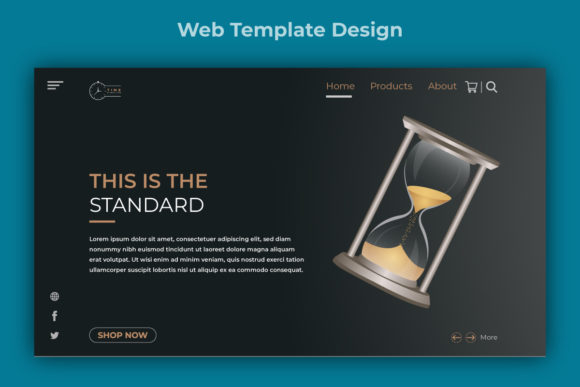
Evaluating the Standard Web Template Landing Page with Flat Illustration Design
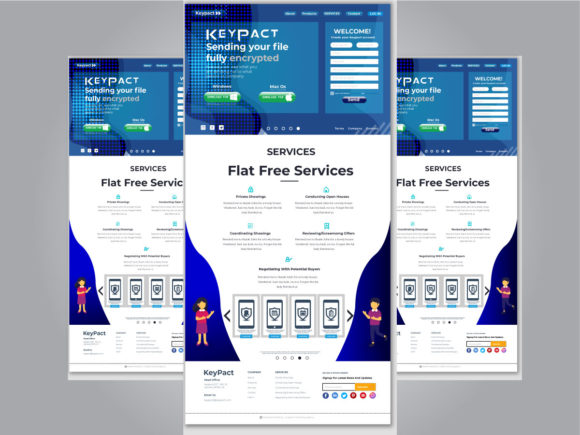
In the current digital landscape, the first few seconds a visitor spends on a website often determine the trajectory of their engagement. For businesses and designers alike, the pressure to deliver an immediate visual impact is significant. This is where the concept of a Standard Web Template Landing Page integrated with modern flat illustration design becomes a critical consideration. Unlike generic stock photography or overly complex 3D renders, this specific design approach offers a balance of aesthetic clarity and functional flexibility. It serves as a foundational resource for creating websites and mobile homepages that feel both contemporary and approachable.
When evaluating resources for a new project, it is essential to understand what distinguishes this template category from others. The core distinction lies in its reliance on vector-based flat illustrations. These are not merely static images; they are modular design elements constructed to be easily resized and recolored. This adaptability allows creators to align the visual identity strictly with their brand guidelines without the need for extensive custom illustration work from scratch. The result is a cohesive look that can enhance customer confidence by presenting a polished, professional interface.
The Strategic Value of Flat Illustration Concepts
Flat illustration has evolved from a passing trend into a staple of modern user interface (UI) and user experience (UX) design. The primary advantage of using a template built on this concept is clarity. By removing unnecessary textures, gradients, and shadows, flat design directs the user's attention to the content and the call to action. When applied to a landing page, this style creates an interactive and attractive impression that feels lightweight and fast-loading—a crucial factor for mobile homepage performance.
Furthermore, the psychological impact of charming designs and illustrations should not be underestimated. Visitors are more likely to trust a service or product that appears friendly and accessible. Complex, corporate-heavy designs can sometimes create a barrier between the brand and the consumer. In contrast, the character-driven elements found in these templates humanize the digital experience. They suggest that there are real people behind the services, fostering a sense of connection that pure text or abstract geometry often fails to achieve.
Customization and Technical Flexibility
One of the most significant decision factors for professionals choosing a design resource is the level of control they retain over the final output. A major strength of this specific template format is its editability within industry-standard software like Adobe Illustrator. Because the files are organized with distinct layers and utilize free fonts, the barrier to entry for customization is low. Designers do not need to hunt for licensed typography or struggle with flattened, uneditable assets.
The technical specifications further support high-quality production. With an RGB color format and a resolution of 300 DPI at 1920 x 1080 pixels, these assets are ready for high-definition screens while maintaining crisp edges when scaled. The ability to change the colors of every individual shape means that a single template can be repurposed for multiple campaigns or entirely different brands. For example, a tech startup might opt for a cool blue and grey palette to convey stability, while a children's education platform could shift the same vectors to vibrant yellows and greens to evoke energy and playfulness.
Comparing Approaches: Templates vs. Custom Builds
When deciding between using a pre-made standard web template and commissioning a fully custom illustration suite, several tradeoffs emerge. A custom build offers unparalleled uniqueness but comes with significant costs in terms of time and budget. It requires close collaboration between stakeholders and illustrators, often leading to extended timelines before a launch can occur.
Conversely, adopting a high-quality template provides an immediate framework. It allows teams to focus their resources on copywriting, functionality, and marketing strategy rather than getting bogged down in asset creation. The "Standard Web Template Landing Page" approach is particularly effective for:
- Startups and SMEs: Organizations that need to establish a credible online presence quickly without exhausting their initial capital.
- Agencies: Teams managing multiple client projects who need a reliable base to accelerate delivery times while maintaining high visual standards.
- Product Launches: Scenarios where a dedicated landing page is needed for a specific campaign, and speed-to-market is a priority.
However, it is important to recognize limitations. If a brand's core identity relies heavily on a very specific, proprietary art style that deviates significantly from flat design norms, a template may require substantial modification to fit. In such cases, the template serves best as a structural guide rather than a final visual solution.
Optimizing for Mobile and Desktop Environments
The versatility of vector illustrations shines brightest when considering responsive design. A landing page must perform equally well on a desktop monitor and a smartphone screen. Raster images (like JPEGs or PNGs) often lose quality when enlarged or appear pixelated on high-density retina displays. Vector graphics, however, are mathematically defined paths that remain sharp at any size. This ensures that the "charming designs" mentioned in the template features translate perfectly across all devices.
Moreover, the modular nature of these elements allows designers to rearrange components for different screen sizes. An illustration that spans the full width of a desktop header can be stacked vertically or simplified for a mobile view without losing its narrative context. This adaptability is crucial for maintaining a consistent user experience (UX) regardless of how the audience accesses the site.
Decision Factors for Choosing the Right Resource
Selecting the right design foundation involves weighing several practical considerations. Prospective users should evaluate their internal capabilities and project requirements against the features offered by the template.
- Software Proficiency: Since full customization requires Adobe Illustrator, teams must have access to this software and the skills to manipulate vector layers. If a team relies solely on drag-and-drop website builders without vector editing capabilities, they may find the customization options underutilized.
- Brand Alignment: Review the included tags and categories—such as Business, Characters, Services, and Product—to ensure the existing library of illustrations matches the industry niche. While colors can be changed, the subject matter of the vectors needs to be relevant.
- Scalability Needs: Consider whether the design needs to evolve over time. The organized layer structure of these templates supports long-term iteration, allowing new elements to be added or existing ones to be swapped out as the business grows.
Balancing Aesthetics with Functionality
While the visual appeal of flat illustrations is a strong selling point, the ultimate goal of any landing page is conversion. The design must support the user journey, not distract from it. The clean lines and open spaces characteristic of flat design naturally create whitespace, which helps guide the eye toward key information and conversion points. This is a functional benefit disguised as an aesthetic choice.
It is also worth noting the SEO implications of using optimized vector graphics. When implemented correctly, SVGs or optimized PNGs derived from these templates can load faster than heavy photographic banners. Page load speed is a known ranking factor and a critical component of user retention. A faster site reduces bounce rates, indirectly supporting search engine optimization efforts.
Final Thoughts on Implementation
The decision to utilize a Standard Web Template Landing Page featuring flat illustration concepts is ultimately a strategic move toward efficiency and modernity. It represents a middle ground between the rigidity of basic themes and the expense of bespoke design. For professionals aged 20 to 50 who are actively researching tools to enhance their digital business, this format offers a compelling value proposition.
By providing a fully editable, high-resolution, and organically structured set of assets, these templates empower creators to take ownership of their visual narrative. They allow for the creation of interactive and attractive impressions that resonate with today's audiences. Whether the goal is to launch a new service, showcase a product, or simply refresh an outdated mobile homepage, leveraging these vector-based resources can significantly streamline the design process while ensuring a professional outcome. As the digital frontier continues to evolve, staying at the forefront often means adopting tools that offer both beauty and utility in equal measure.