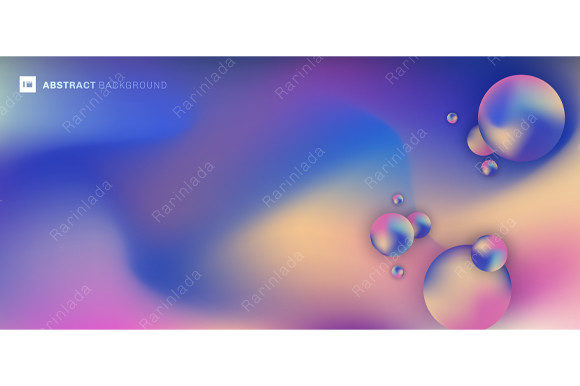
Elevating Visual Identity with Abstract 3D Circles and Fluid Shapes
In the current landscape of digital design, the shift away from flat, two-dimensional interfaces toward more immersive, tactile experiences is undeniable. Designers and content creators are constantly seeking assets that bridge the gap between technical precision and artistic expression. One resource that effectively captures this modern aesthetic is the collection known as Abstract 3D Circles Elements Fluid Shape. This asset pack represents more than just a set of graphics; it is a toolkit for establishing a contemporary visual language that resonates with audiences accustomed to high-quality, dynamic media.
The core appeal of this collection lies in its synthesis of geometric stability and organic movement. By combining rigid 3D circular elements with trendy fluid shapes rendered in gradient colors, the design offers a versatile foundation for various creative projects. Whether you are developing a corporate brochure, designing a landing page, or creating a social media banner, understanding the utility and technical specifications of such vector illustrations is crucial for maintaining a professional workflow.
The Intersection of Geometry and Organic Flow
At first glance, the juxtaposition of circles and fluid forms might seem contradictory. Circles represent perfection, unity, and structure, while fluid shapes suggest motion, adaptability, and chaos. However, when executed correctly, as seen in this specific vector illustration set, the combination creates a harmonious balance. The Abstract 3D Circles Elements Fluid Shape utilizes depth and lighting to give the circles a tangible presence, making them appear as if they are floating within or interacting with the liquid gradients.
This duality is particularly effective for branding and marketing materials. For entrepreneurs and small business owners, the ability to convey both stability (through the circles) and innovation (through the fluid gradients) is a powerful narrative tool. The gradient colors add a layer of sophistication, moving beyond solid blocks of color to create a sense of dimension and light. This mimics the way light interacts with real-world objects, providing a subconscious cue of quality and attention to detail to the viewer.
Technical Superiority: The Power of Vector Formats
From a practical standpoint, the format of these graphics is perhaps their most significant asset. The file is provided as a 100% vector illustration, specifically in EPS Version 10 and high-resolution JPG formats. For professionals working in Adobe Illustrator, Corel Draw, or other vector-based graphic programs, this distinction is vital. Unlike raster images, which degrade when scaled up, vector graphics rely on mathematical paths. This means the Abstract 3D Circles Elements Fluid Shape can be resized from a small icon on a mobile app to a massive billboard without any loss of clarity or sharpness.
The inclusion of the EPS Version 10 format ensures broad compatibility. While newer software versions offer advanced features, sticking to version 10 guarantees that freelancers and agencies using slightly older, yet still industry-standard, software can access and edit the files without error. Furthermore, the claim of "fully editable" is not merely a marketing buzzword here; it implies that every gradient stop, every curve of the fluid shape, and every shadow on the 3D circles can be manipulated. This level of control allows a marketer to match the brand colors of a client precisely, rather than being stuck with a pre-rendered image that doesn't quite fit the palette.
Real-World Applications Across Industries
The versatility of this design pack makes it suitable for a wide array of applications. Let us consider how different professionals might integrate these elements into their daily workflows:
- Web Designers and Developers: For landing pages and hero sections, these fluid shapes serve as excellent background elements. They add depth without distracting from the primary call-to-action text. The "space for your text" mentioned in the asset description suggests that the composition is deliberately balanced to allow for overlay content, a critical consideration for conversion-focused web design.
- Print Media Specialists: With a resolution capability of 300 DPI when exported or utilized correctly, these vectors are print-ready. They are ideal for brochure covers, flyer headers, and magazine spreads. The crisp lines of the vector ensure that even fine details in the gradients remain smooth on paper.
- Social Media Managers: In an era where visual consistency drives engagement, using a cohesive set of abstract elements helps establish a recognizable brand identity across platforms like Instagram, LinkedIn, and Facebook. The trendy nature of the fluid gradients aligns well with current design algorithms that favor high-contrast, visually stimulating content.
- Publishers and Educators: Textbooks and educational materials often suffer from dry, uninspiring visuals. Incorporating these abstract 3D elements can modernize the look of educational covers or section dividers, making the material feel more accessible and engaging to students.
Evaluating Usability and Workflow Efficiency
Time is a scarce resource for creators. The value of a design asset is often measured by how much time it saves versus how much it costs. A "no watermark" file that is immediately usable upon download eliminates the friction of hunting for stock photos or creating complex shapes from scratch. The Abstract 3D Circles Elements Fluid Shape allows a designer to drop the elements into a layout and immediately begin tweaking colors or opacity to suit the project needs.
However, usability also depends on the organization of the layers within the vector file. A well-structured EPS file will have logical grouping of elements—separating the background fluids from the foreground circles. This separation is essential for non-destructive editing. If the elements are flattened or poorly grouped, the "fully editable" promise loses its weight. Based on the description of high-resolution output and standard vector compatibility, one can infer a professional grade of file construction, though users should always inspect the layer panel upon opening the file to optimize their specific workflow.
Long-Term Value and Design Longevity
Trends in graphic design are notoriously fleeting. What is considered "trendy" today may look dated in a year. However, abstract geometry tends to have a longer shelf life than illustrative trends tied to specific cultural moments. The combination of 3D circles and fluid gradients taps into a broader movement toward "glassmorphism" and soft 3D aesthetics that have shown resilience in the design community. By investing in a high-quality vector pack like this, businesses are not just buying a temporary fix; they are acquiring a flexible asset that can evolve with their brand.
Furthermore, the scalability of vector graphics ensures that the asset remains useful as display technologies improve. As screens move toward higher pixel densities (Retina, 4K, 8K), raster images often struggle to keep up without massive file sizes. Vectors remain lightweight and crisp regardless of the display resolution, offering a sustainable solution for future-proofing digital assets.
Considerations for Implementation
While the benefits are clear, there are practical considerations to keep in mind. First, while the file is vector-based, the complexity of the gradients and 3D effects can sometimes increase the processing load on older computers. When working with multiple instances of these heavy vector shapes in a single document, performance may vary depending on the hardware capabilities of the user.
Additionally, context is key. The bold, colorful nature of fluid gradients may not suit every brand identity. Conservative industries such as law or traditional finance might find the aesthetic too playful or avant-garde. In such cases, the strength of the vector format shines again; designers can desaturate the gradients, simplify the shapes, or use the circles in isolation to create a more subdued variation that still leverages the high-quality geometry of the original pack.
Ultimately, the decision to utilize Abstract 3D Circles Elements Fluid Shape should be driven by the specific goals of the project. For those looking to inject energy, depth, and modernity into their visual communications, this resource offers a robust, technically sound, and aesthetically pleasing solution. It bridges the gap between artistic flair and functional design, providing a reliable foundation for professionals who demand both quality and flexibility in their creative tools.
By understanding the technical underpinnings of the EPS format and the psychological impact of 3D fluid dynamics, creators can make informed decisions that elevate their output. Whether for a startup's pitch deck or an established corporation's annual report, these elements provide the visual polish necessary to stand out in a crowded digital environment.